English| EUR
Suggested for you
More currencies
Choose a language
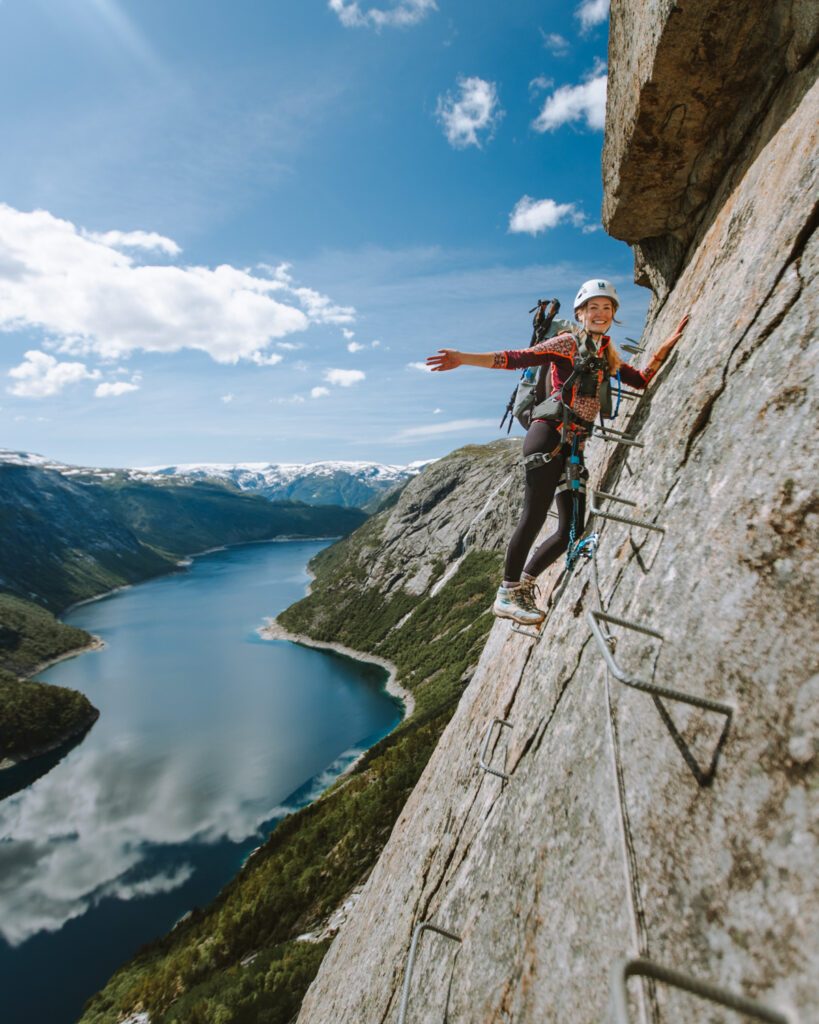
Via ferrata routes transform exposed mountain terrain into climbable passages using fixed steel cables, iron rungs, and anchored safety systems. The Trolltunga via ferrata sits 1,000 meters above Ringedalsvatnet lake, crossing vertical rock faces and steep gullies where a fall would be fatal without protection. This guide explains the objective hazards, required equipment, and what separates manageable exposure from genuine danger.
Quick answer
The Trolltunga via ferrata is a controlled-risk route that requires proper harness use and basic climbing competence but is designed to be navigable by fit hikers with no prior mountaineering experience. The fixed cable system eliminates free-climbing exposure, but the route remains physically demanding over 3-4 hours of sustained effort at altitude. Weather shifts, equipment misuse, and exhaustion represent the primary dangers rather than technical climbing difficulty.
Via ferrata translates to "iron road" and the Trolltunga route delivers exactly that: a continuous steel lifeline anchored into granite every few meters, allowing climbers to clip in and move across terrain that would otherwise require ropes and belaying partners. The danger lies not in the climbing itself but in the environment surrounding it. At over 1,000 meters of vertical exposure, a cable system failure or harness detachment would be unsurvivable, yet properly used equipment has an extraordinary safety record across thousands of European via ferrata routes established over the past century. The route's physical demands create the most common safety issues. Climbers spend hours gripping steel cables with tired forearms, crossing narrow ledges where a slip would load the harness and safety lanyards, and navigating sections where both hands must work independently to transfer carabiners between cable segments. Fatigue-induced errors—clipping only one lanyard instead of two, unhooking before reaching the next anchor point, or losing balance during a transfer—represent the majority of incidents on via ferrata routes worldwide. Understanding via ferrata safety means respecting the sustained concentration required, not just the initial thrill of exposure. Weather transforms moderate routes into dangerous ones within minutes. The Trolltunga via ferrata crosses open rock faces with zero shelter from wind or precipitation, and steel cables become dangerously slick when wet. Summer thunderstorms pose a lightning-strike risk on exposed metal infrastructure, and morning fog can reduce visibility to a few meters while climbers are mid-traverse. Independent climbers pay a 380 NOK maintenance fee and receive basic equipment orientation, but they navigate the route without a guide. This autonomy requires honest self-assessment: the via ferrata risks are manageable for those with stamina, attention to safety protocols, and the judgment to turn back when conditions deteriorate. The route itself is forgiving; the mountain environment is not.
“The fixed cable system eliminates free-climbing exposure, but the route demands sustained concentration over hours of vertical terrain where fatigue-induced errors carry real consequences.”
The via ferrata itself is engineered for safety, but weather, fatigue, and inadequate gear turn manageable exposure into genuine risk. Most incidents stem from underestimating the route's physical demands or arriving unprepared for sudden weather shifts.
Starting after 14:00 without accounting for descent time
Begin no later than 14:00 to complete the route and return before conditions deteriorate or darkness falls.
Wearing running shoes or sneakers instead of ankle-supporting boots
Use hiking boots with ankle support and aggressive tread—wet rock and steel rungs demand stable footing.
Ignoring weather forecasts and climbing during unstable conditions
Check the forecast the night before and morning of your climb. Postpone if rain, high winds, or fog are predicted—exposed sections offer no shelter.
Climbing without gloves, leading to hand fatigue and blisters
Bring durable gloves to protect your hands during prolonged contact with steel cables and rungs, reducing fatigue over the 4–5 hour route.
Skipping hydration or food, assuming the route is short
Carry at least 1.5 liters of water and energy-dense snacks. The combination of exertion, altitude, and exposure accelerates dehydration and energy loss.
The Trolltunga via ferrata requires proper equipment and preparation to manage exposure and fixed steel sections safely.
The safest window for the Trolltunga via ferrata is the summer season from June to August, specifically utilizing the best arrival window of 07:00–14:00. Starting early is vital to avoid congestion-related delays and to ensure sufficient daylight for a controlled descent.
Stable, 10°C to 18°C
Clear weather windows prevail, allowing for predictable climbs within daylight hours.
Cool, 3°C to 10°C
Expect shorter days and potential early snow, requiring strict adherence to early start times.
—
Starting within the 07:00–14:00 arrival window minimizes bottlenecks on technical sections and reduces risk of fatigue.
Verdict: The best slot is a weekday between June and August, arriving at the trailhead promptly at 07:00 to maximize daylight and minimize crowd exposure.
The Trolltunga via ferrata route is open daily throughout the week. Visitors should plan their schedule to ensure they operate within these established timeframes.
Everything you need to know about how dangerous is via ferrata
The Trolltunga route is a high-altitude climb involving significant exposure, meaning that understanding how dangerous is via ferrata requires respecting vertical terrain and physical exertion. While the route is secured with steel cables, climbers must maintain focus and proper technique to mitigate fall risks. Participants should assess their own fitness before attempting this iron path.
The route is physically demanding and exposed, so while prior rock climbing experience is not required, participants must have good stamina and no fear of heights. Determining how dangerous is via ferrata for beginners depends on individual comfort levels with steep drops and sustained physical activity.
All climbers must use certified harnesses, shock-absorbing lanyards, and helmets to ensure security on the steel wire. Using proper gear is fundamental to addressing how dangerous is via ferrata, as these tools provide the necessary protection against potential falls.
Rapid weather shifts are common in the Norwegian mountains, and wet rock significantly increases the difficulty of the ascent. Hikers must monitor forecasts closely because rain and wind create slippery conditions that transform the overall danger profile of the climb.
Independent climbers are permitted to use the route, provided they possess the necessary skills and equipment to navigate the ascent safely. These individuals are responsible for their own safety and must pay the mandatory maintenance fee to support the upkeep of the bolts and cables.
The 380 NOK maintenance fee per person ensures that the climbing infrastructure remains in good condition for all visitors. Regular inspections are vital to keep the route secure, as outdated or damaged hardware would drastically increase the inherent risks.
To ensure a safe climb and avoid congestion, you should start your ascent between 07:00 and 14:00. Arriving within this window helps you complete the route before nightfall and prevents overcrowding on the exposed sections of the cliff face.
Trolltunga Via Ferrata Route Map & Topo
Read more GuideTrolltunga Via Ferrata Time & Completion Requirements
Read more GuideTrolltunga Via Ferrata Difficulty & Grade
Read more GuideDoing Trolltunga Via Ferrata Without a Guide
Read more Tickets & toursTrolltunga Via Ferrata Prices & Tour Booking
Read more